⚠️ WARNING Your Dreams Can Be Hacked! Brain Technology


For centuries, dreams have been humanity’s most intimate, secret, and untouchable sanctuary. It was the one safe space where no one else could enter, judge, or interfere. However, technology has begun to force this door open. By 2025, developments in AI and neurotechnology are proving that our dreams are not only “observable” but also “directable.” The question is: Is your brain ready to be hacked?
1. Not Sci-Fi, But Reality: How Does the Technology Work?
Scientists have been analyzing brain waves using fMRI and EEG devices for years. However, the entry of Generative AI into this equation has changed everything.
- Brain Decoders: In studies conducted at the University of Texas and Kyoto University, images visualized by participants (both while awake and asleep) were reconstructed by AI with startling accuracy (60-80%).
- Neuralink and BCIs (Brain-Computer Interfaces): Ventures like Elon Musk’s Neuralink are accelerating the speed at which brain signals are converted into digital data. This suggests that in the near future, our dreams could be “recorded” just like a movie.
2. Targeted Dream Incubation (TDI): Can Ads Be Placed in Your Dreams?
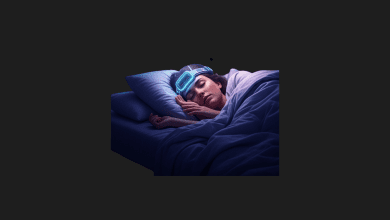
The scariest scenario isn’t just reading dreams, but manipulating them. The “Dormio” device developed by the MIT Media Lab successfully altered the content of subjects’ dreams by delivering specific audio cues during the onset of sleep (the Hypnagogic state).
This technology begs the question: Can corporations place ads in your dreams? There have already been experiments where beverage companies attempted “dream incubation” to insert their products into people’s dreams before major events like the Super Bowl. Imagine waking up suddenly craving a specific product without knowing why, only to realize the urge came from a signal implanted in your dream. This is exactly what “Dream Hacking” is.
3. Biological Data Privacy and “Neurorights”

If your smartwatch knows your heart rate and your phone knows your location, your neuro-devices will soon know your deepest fears and desires. This situation is giving birth to a new concept of human rights: Neurorights.
Chile became the first country in the world to constitutionally protect “brain data.” In the near future, the “Right to Cognitive Liberty” will need to be established on a legal ground just as significant as freedom of speech.


Conclusion: Awakening or Nightmare?
This technology holds incredible potential for treating PTSD or preventing chronic nightmares. However, if this power is used unchecked for commercial or malicious purposes, the movie “Inception” could become our reality.
Our mental freedom is more valuable than the comfort technology brings. As we step into the future, we must ask: Do our dreams still belong to us, or do they belong to the algorithms?
You Might Also Like;